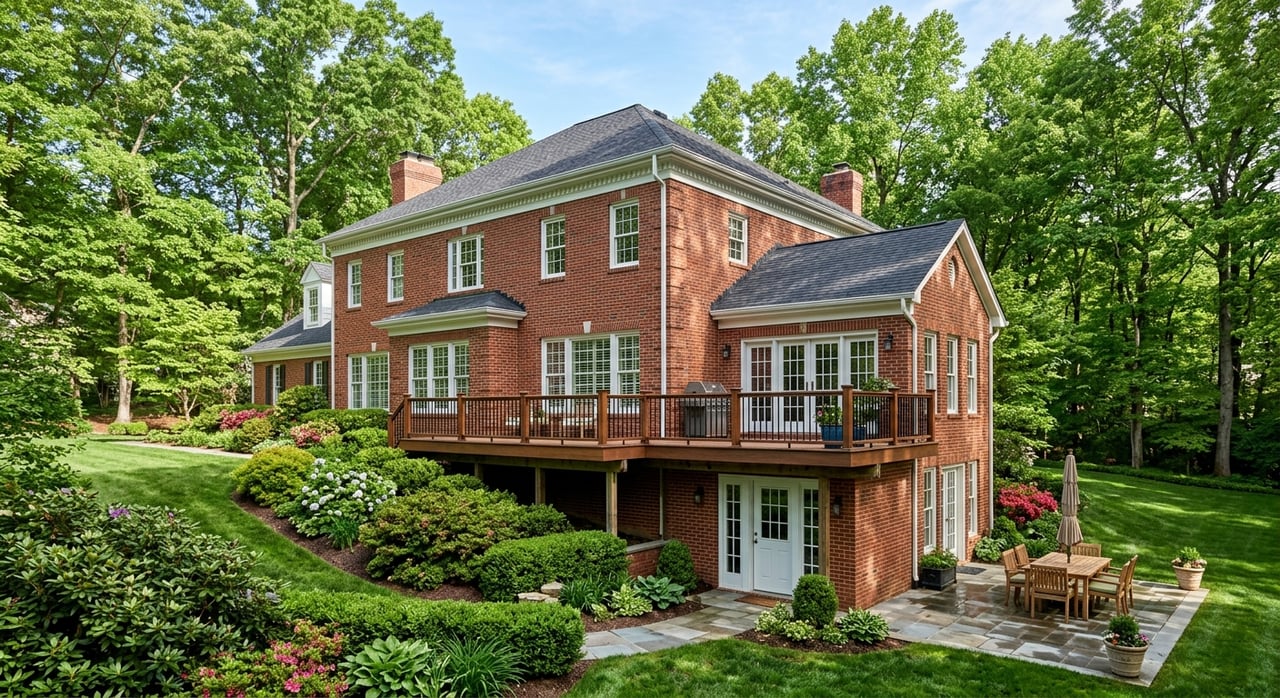
Springfield VA Rental Property Guide for Local Investors
April 16, 2026
April 16, 2026
If you are thinking about buying a rental property in Springfield, VA, the numbers can look promising at first glance, but the details matter. This is a commuter-oriented Fairfax County market with solid household incomes, a meaningful renter base, and several common property types to choose from. In this guide, you will get a practical look at Springfield rental property basics, from local demand and rent benchmarks to taxes, vacancy, and landlord rules, so you can make better investment decisions. Let’s dive in.
Springfield is not a small niche market. According to the U.S. Census QuickFacts for Springfield CDP, the area has about 31,000 residents, 10,801 housing units, a 66.0% owner-occupied rate, median gross rent of $2,656, and median household income of $125,999. Those figures point to a higher-value suburban market with renter demand supported by working households.
The local population profile also matters. Springfield has a relatively educated and mobile population, with 46.9% of residents holding a bachelor’s degree or higher, 40.2% of residents born outside the U.S., and a mean commute of 29.1 minutes, based on the same Census QuickFacts data. For investors, that often translates into demand for well-maintained homes with convenient access to transportation and day-to-day services.
One of the first things to understand about Springfield is that not every data source measures the market in the same way. The census-defined Springfield CDP is different from the Springfield Supervisor District and other county planning boundaries, so rent, vacancy, and housing stock figures may not line up perfectly. That does not make the data unusable, but it does mean you should treat some market numbers as directional rather than directly comparable.
This is especially important when reviewing rent figures. The Census QuickFacts page reports a median gross rent of $2,656 for Springfield CDP, while Fairfax County’s 2023 rental housing report shows an average monthly rent of $2,008 for rental complexes in Springfield Supervisor District. Those figures come from different data sets and methods, so the gap is not necessarily a warning sign. It is simply a reminder to compare similar property types and geographies when you analyze a deal.
Springfield’s housing stock is mixed, which gives investors a few different paths depending on budget and strategy. Fairfax County’s 2024 demographic report separates Springfield-owned housing into single-family detached, single-family attached, and multifamily categories. The county notes that single-family attached includes townhouses, duplexes, and multiplex units.
In practical terms, that means you are most likely to encounter three common rental formats:
Each product type can attract a different renter profile and create a different maintenance and management workload. Detached homes may offer space and flexibility, while townhomes can provide a more approachable entry point for investors who want a residential rental in a well-established area.
Rental pricing can vary by building type, not just by address. Fairfax County’s 2023 rental housing analysis reported these average monthly rents:
This is useful because it gives you a more grounded way to estimate income based on the kind of property you are considering. If you are underwriting a townhouse, for example, using townhouse-specific rental data may be more helpful than relying on a broad market average.
Springfield benefits from strong regional transportation access. Fairfax County commuter services highlight the Franconia-Springfield station on WMATA’s Blue Line, as well as the Backlick Road VRE station and the Springfield Community Business Center commuter garage, which offers free parking and access to bus, bike, and carpool options. You can review those options through Fairfax County commuter services.
For a landlord, this matters because it expands your potential renter pool. A property in Springfield may appeal not only to people who work nearby, but also to renters commuting to other parts of Northern Virginia, D.C., or related employment centers.
Another major local demand driver is Fort Belvoir. According to the official Fort Belvoir site, the installation is home to more than 145 mission partners and serves more than 216,050 military members, civilians, retirees, and families. That creates ongoing demand for housing options within a manageable commute.
If you are investing in Springfield, this can be an important factor in your leasing strategy. The area may appeal to military and defense-connected renters looking for convenience, predictability, and professionally managed housing.
Income is only one side of the equation. You also need realistic assumptions for vacancy, turnover, repairs, and reserves. Fairfax County’s 2023 rental housing report shows a 5.1% vacancy rate for rental complexes in Springfield Supervisor District, compared with 6.0% countywide.
That suggests Springfield is not unusually soft, but it is also not a market where you should assume perfect occupancy. A smart underwriting model should leave room for:
Conservative assumptions can help you avoid overpaying or overestimating cash flow. In a higher-value market like Springfield, small mistakes in projections can quickly affect your returns.
Taxes are a major part of rental property math in Fairfax County. The county’s real estate tax rates page lists the 2026 proposed base real estate tax rate at $1.1225 per $100 of assessed value. The same county source also notes Springfield’s 2026 mean residential equalization change is +3.56%.
That is important because your tax bill can rise even if the tax rate itself does not change. Assessment changes and any parcel-specific special service charges can affect your ownership costs, so you should verify the tax details for the exact property you are considering rather than using only a market-wide average.
Virginia does not have rent control, but that does not mean rental ownership is hands-off. Fairfax County’s Tenant-Landlord Handbook outlines several rules that directly affect how you operate a rental.
Here are a few basics local investors should understand:
The handbook also recommends documenting move-in condition with photos and notes that landlords may require renter’s insurance. These may sound like small operational details, but they can make a big difference if there is a dispute later.
A rental property is not only a purchase decision. It is an operating business. Fairfax County states in its Tenant-Landlord Handbook that landlords regain possession through a lawsuit in General District Court rather than through self-help action.
That is one reason records, notices, lease compliance, and documentation matter so much. Good property management is often less about reacting to problems and more about preventing them through clear systems, thorough screening, responsive maintenance coordination, and consistent lease administration.
Before you buy a rental in Springfield, make sure you have worked through these basics:
This kind of groundwork can help you move from a rough idea of returns to a more reliable investment plan.
Springfield looks like a stable, commuter-oriented Fairfax County submarket with a meaningful rental base, several common property types, and demand drivers tied to regional transportation and Fort Belvoir. The biggest opportunity is not just finding a property in the right ZIP code. It is buying with disciplined numbers, realistic operating assumptions, and a clear plan for management.
If you want help evaluating a Springfield rental property, leasing a home, or setting up ongoing management support, John Irvin can help you take the next step with local market insight and hands-on guidance.



We pride ourselves in providing personalized solutions that bring our clients closer to their dream properties and enhance their long-term wealth. Contact us today to find out how we can be of assistance to you!